Safe Storage: Why Plastic Drums are the Go-To for Chemicals in the UAE
Handling hazardous liquids in the middle of a desert summer isn’t just a logistics hurdle—it’s a safety mission. If you’re managing a warehouse in Dubai or a manufacturing plant in Abu Dhabi, you know the stakes. One leak can shut you down. One reactive spill can cause a disaster. That’s why plastic drums have become the gold standard for chemical storage across the Emirates. They aren’t just containers; they’re the frontline of your safety protocol.
The short answer? Corrosion. In the high humidity and intense heat of the UAE, metal drums eventually rust. When you’re storing acids or volatile solvents, rust is an invitation for a leak.
Our plastic drums at Tekin Plast are made from high-density polyethylene (HDPE). This material is chemically inert. It doesn’t care if you’re storing caustic soda or industrial-grade detergents; it won’t react, peel, or degrade. Plus, they are significantly lighter than steel, which means your team saves on muscle strain and you save on shipping costs.
Open-Top vs. Closed Top: Which Do You Need?
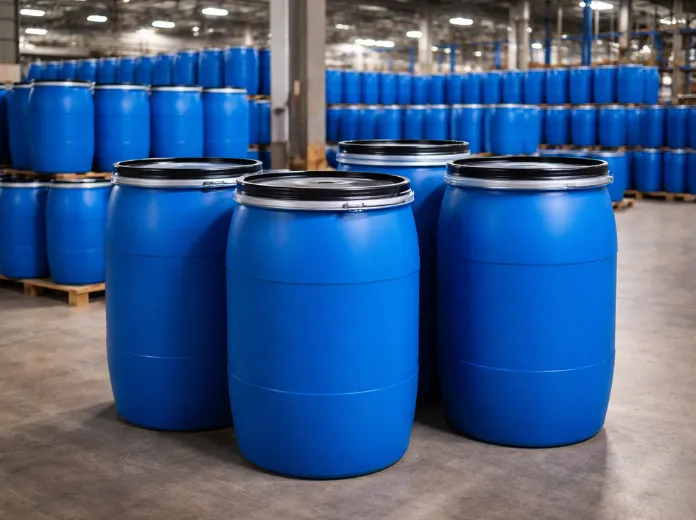
➤Open-Top Drums: These come with a removable lid and a heavy-duty galvanized locking ring. They are perfect for solids, powders, or viscous liquids like resins that you need to scoop out.
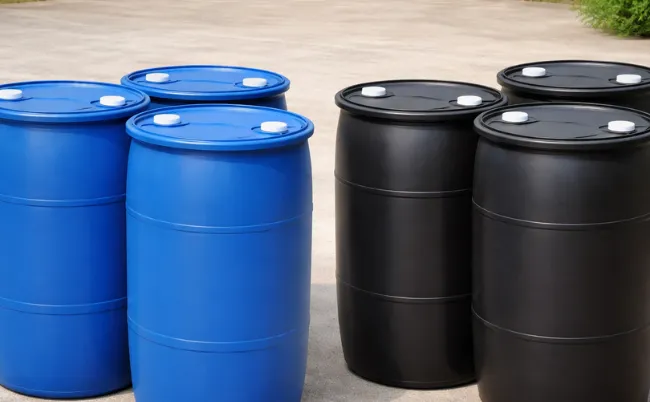
➤Closed Top (Tight Head) Drums: These are permanently sealed with two small bungs at the top. They are the MVP for thin liquids. If you’re transporting solvents or liquid chemicals, these offer the best leak protection during transit.
Are Your Plastic Drums UAE Heat-Proof?
This is the question we get most often. “Will these melt in a Jebel Ali warehouse?”
Standard plastic might warp, but industrial HDPE is UV-stabilized. It’s engineered to maintain its structural integrity even when the mercury hits 50°C. This durability is why industries from agriculture to pharmaceuticals trust them for long-term storage.
Staying Compliant with UAE Safety Rules
Storing chemicals in the UAE involves more than just a sturdy barrel. You have to follow the “110% rule.” This means your secondary containment, like a spill pallet, must be able to hold 110% of the volume of your largest drum.
➤Inspect weekly: Check for cracks or stress whitening.
➤Label everything: Use GHS-compliant stickers so your team knows exactly what’s inside.
➤Use the right tools: Don’t DIY a siphon. Use proper drum pumps to avoid splashes.
Final Thoughts
At the end of the day, your storage is only as good as the material it’s made of. Are you still risking your floor space with aging metal barrels, or are you ready to switch to something that actually handles the heat?
The short answer? No. Never. Even if you scrub it with the best cleaners, plastic is porous at a microscopic level. Residues can linger. If it started as a chemical drum, it stays a chemical (or waste) drum.
Most industrial-grade HDPE drums are built for years of service, but it depends on what you're storing. Harsh acids might wear a drum down faster than water. At Tekin Plast, we focus on durability that handles the UAE's specific climate.
Most of our drums are designed to be stackable to save space. Generally, you can go two high when full, provided you're using a flat, stable surface or a pallet. Always check the specific load rating before going higher.
If you use cheap, non-UV-rated plastic, yes. But our drums are UV-stabilized. They won't turn into a pile of blue flakes just because they spent a week on a loading dock in Sharjah.