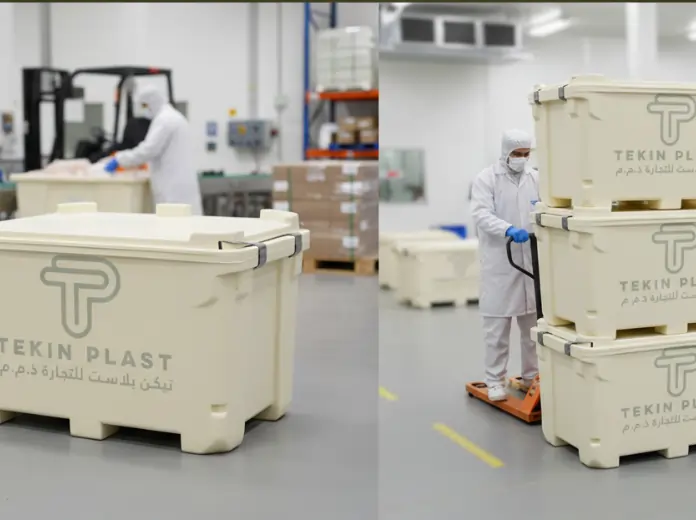
Plastic Tub Recycling: The Real Challenges and Solutions
Let’s be honest: recycling isn’t as simple as tossing a container into a green bin and feeling good about yourself. In the industrial world, plastic tub recycling is a complex puzzle. While we all want a cleaner planet, the gap between “recyclable” and “actually recycled” is massive.
At Tekin Plast, we don’t just make heavy-duty tubs; we focus on the entire product lifecycle. If you’re dealing with bulk storage or logistics, you’ve likely seen the hurdles firsthand. Contamination, material mixing, and high costs often turn good intentions into landfill waste. But it doesn’t have to stay that way.
The biggest headache? Material complexity. Most industrial tubs aren’t just a single layer of plastic. For instance, insulated tubs feature a high-density PU insulation sandwiched between UV-stabilised shells.
While this makes them legendary for temperature retention in the food and pharma sectors, it creates a challenge at the end of their life. You can’t just grind the whole thing up together.
We believe the solution starts on the factory floor. By leaning into sustainable manufacturing practices, we create products designed to last years, not weeks.
Durability over disposability: Our tubs are engineered for “longer endurance”. A tub that lasts 10 years replaces dozens of flimsy, single-use alternatives.
Mono-material focus: Where possible, using single-grade polymers like HDPE makes the eventual breakdown much smoother.
Clean design: Smooth internal surfaces aren’t just for hygiene; they make it easier to wash away residues, ensuring the plastic stays “high-grade” for its next life.
The shift in Industrial Packaging
The tide is turning for industrial packaging. Companies are moving away from “take-make-dispose” and toward a circular model. We’re seeing more businesses in the UAE investing in high-quality, reusable assets rather than cheap, brittle bins.
The short answer for the future? Better sorting and better design. When you choose a partner that prioritises food-grade, certified materials, you’re already ahead of the curve.
Final Thoughts
Is the system perfect? No. But by choosing durable, intelligently designed tubs, you’re reducing the pressure on our recycling infrastructure. It’s about making smarter choices at the point of purchase so that “end-of-life” doesn’t mean “end-of-the-road”.
Not exactly. Look at the bottom for a number. Usually, 1 (PET) and 2 (HDPE) are the easiest to get rid of. If it’s a #5 (polypropylene) or a mixed-material insulated tub, your local curbside pickup might skip it. You’ll need a specialist for those.
Yes. If there’s old fish juice or chemical residue inside, it’s trash. Recyclers need clean material to make high-quality pellets. A quick rinse makes the difference between a new product and a landfill.
It can be. Every time plastic is melted down, the polymer chains get shorter. That’s why we focus on durability first—the longer a tub stays in service, the less we need to worry about the "downcycling" problem.
It’s the logistics. Collecting, transporting, and professionally cleaning heavy-duty industrial packaging costs money. Often, it’s cheaper to make new plastic from oil, which is exactly why we need better incentives and smarter product designs.