How to Choose the Reliable Dry Ice Containers: The Complete Guide
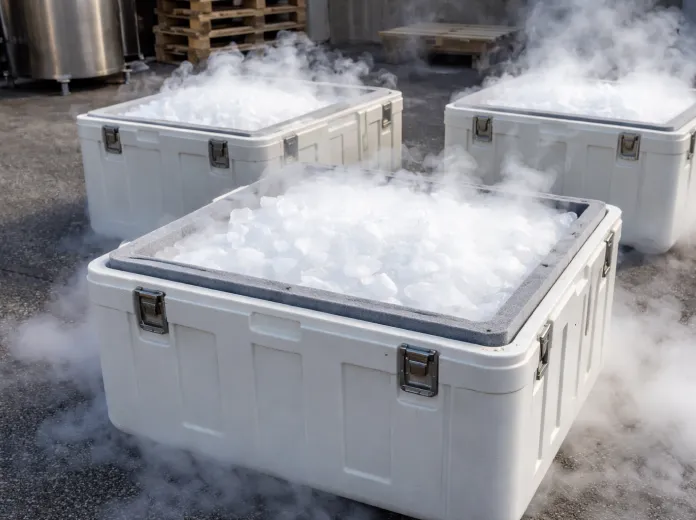
Storing dry ice isn’t like keeping leftovers in the fridge. It is a volatile, freezing substance that vanishes into thin air if you look at it wrong. If you are handling logistics, healthcare, or high-end catering, the wrong container isn’t just a waste of money; it is a safety hazard. You need a setup that balances extreme insulation with smart venting. Finding the right dry ice containers means looking beyond a simple plastic tub.
The goal is simple: keep the solid stuff solid for as long as possible while keeping your team safe from CO₂ buildup.
Why Does Insulation Thickness Matter for Dry Ice Containers?
The short answer? Sublimation. Dry ice doesn’t melt; it turns directly into gas. Without thick, high-density polyurethane insulation, you’ll open your box to find nothing but cold air. A professional-grade box uses a heavy-duty polyethylene shell to lock in those sub-zero temperatures.
Quality boxes often feature a 320-liter capacity to handle bulk pellets or blocks. This scale is vital for industrial use where frequent opening of the lid would otherwise kill your efficiency. Compressed Gas Association Safety Standards suggests that even with great insulation, you should expect a small percentage of loss daily, so starting with a high-performance seal is non-negotiable.
What Are the "Must-Have" Features for Industrial Transport?
If you are moving temperature-sensitive materials, mobility is your best friend. Look for heavy-duty caster wheels. A full 320L box is heavy. You don’t want your crew struggling with dead weight.
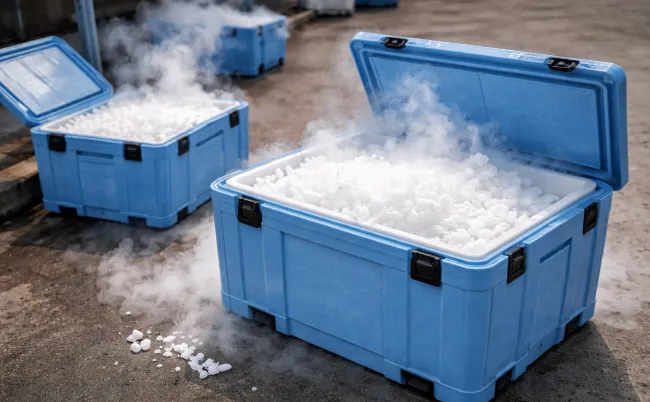
You also need a secure lid design. But “secure” doesn’t mean “airtight.” Never seal dry ice in a completely hermetic container; the gas pressure will eventually cause it to burst. Professional boxes use a sturdy lid that maintains a thermal seal while allowing enough “breathability” to prevent pressure disasters.
How to Calculate the Capacity You Actually Need
Don’t just buy the biggest box available. If you put a small amount of dry ice in a massive 320L container, the extra headspace will actually speed up sublimation. You want to keep the box as full as possible.
Logistics experts often recommend matching your box size to your typical 24-hour turnover. If you’re in the food industry or pharmaceutical logistics, a durable build made from hygienic, easy-to-clean polyethylene is the standard. It stands up to the “industrial cold” without the hygiene risks of porous materials.
Final Thoughts
Choosing dry ice containers is about protecting your bottom line and your people. Does your current box have the thermal retention to survive a Dubai summer? If you’re ready to upgrade to a heavy-duty, high-capacity solution that actually holds its temperature, check out the options at Tekin Plast. What’s your current sublimation rate costing you?
You can, but it’s a gamble. Most "beach" coolers aren't rated for -78.5°C. The plastic can get brittle and snap. Plus, if it’s too airtight, you’ve basically made a small pressure bomb. Stick to boxes designed for the job.
It depends on how much you fill it, but a high-quality insulated box can keep dry ice for several days. Just remember: every time you peek inside, you’re letting the cold out.
Only if the room is huge and very well-ventilated. Dry ice releases CO₂. In a small, sealed room, that gas can displace oxygen. Not a great vibe for a Monday morning.
Wait for it to reach room temperature first! Then, a simple wipe-down with mild soap does the trick. The smooth polyethylene surfaces are designed to be hygienic and easy to maintain.