


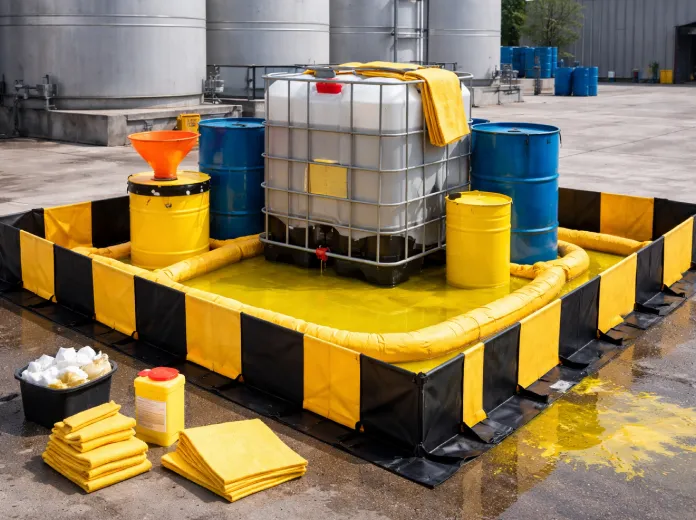
5 Unexpected Industries That Rely on Spill Containment Solutions
Think spill containment solutions are just for massive oil refineries or chemical plants? Think again. While those giants definitely need them, the reality is much closer to home and much more varied.
Whether it’s a boutique bakery or a local medical lab, any business handling liquids has a mess (and a fine) waiting to happen. If you’re storing anything that can drip, leak, or pour, you’re in the spill management game whether you like it or not.
Table of Contents:
Does Your Commercial Bakery Need Spill Protection?
Yes, and it isn’t just about flour dust. Industrial bakeries handle massive quantities of vegetable oils, liquid flavorings, and cleaning chemicals for their vats. A single ruptured drum of oil turns a kitchen floor into a skating rink in seconds.
Beyond the safety hazard, food-grade oils are a nightmare to clean once they hit the floor. Using something like the spill pallet STP-1H ensures that if a container fails, the 225-liter sump catches the mess before it ruins your production line.
Why Are Medical Supplement Factories Using Spill Pallets?
Safety in medicine isn’t just about the pills; it’s about the ingredients. Factories producing supplements deal with concentrated liquid vitamins, extracts, and ethanol-based solutions. These liquids are often expensive and potentially hazardous in high volumes.
To maintain hygiene standards is a core part of what we do at Tekin Plast. These facilities use secondary containment to prevent cross-contamination. It keeps the floor sterile and ensures that a small leak doesn’t turn into a regulatory headache.
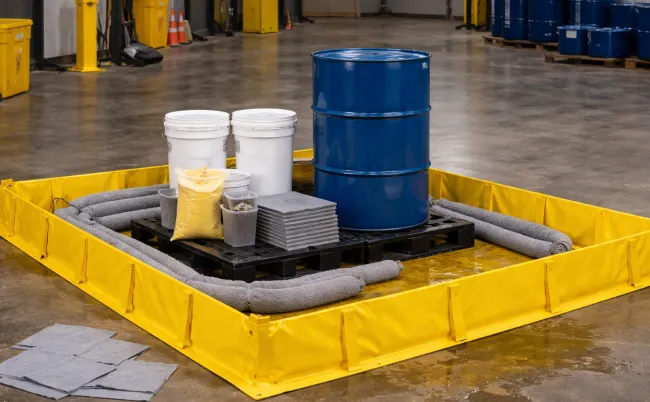
Can Fish Markets Benefit From Spill Containment Solutions?
It sounds odd until you walk into a large-scale fish market. Between the melting ice, fish oils, and heavy-duty disinfectants used to wash down the stalls, the floor is a constant battleground.
Spill containment solutions help manage the runoff and chemical storage for cleaning agents. Keeping these liquids contained prevents them from entering local water systems, a huge win for environmental compliance in the UAE.
Are Dress Shops and Textile Hubs at Risk?
You wouldn’t think a clothing store needs industrial safety gear, but the textile industry is liquid-heavy. Think about dyes, fabric treatments, and large-scale cleaning solvents.
A spill in a textile warehouse doesn’t just cause a slip; it ruins thousands of dollars worth of inventory. Strategic placement of containment solutions keeps the dyes where they belong and the “Ready-to-Wear” collection actually ready to be worn.
How Do Catering Companies Manage Liquid Waste?
Catering isn’t just about plating food; it’s about logistics. When you’re moving large quantities of liquid soups, oils, or beverages, the risk of a transport spill is high.
Pro-tier catering operations use low-profile spill trays during prep and storage. It’s the difference between a quick wipe-down and a four-hour deep clean that puts you behind schedule for a major event.
Final Thoughts
At the end of the day, if you’re handling liquids, you’re responsible for where they end up. From the heavy-duty spill pallet STP-1H that supports 300 kg to small drip trays, having the right gear is just smart business.
FAQ
Short answer: Yes. One drum can hold 200+ liters. If that leaks, it’s not a "puddle," it’s a flood. A spill pallet like the STP-1H catches that entire volume, keeping you compliant and your floor dry.
You’re looking at hefty fines and potential shutdowns. Municipalities and environmental agencies don't play around with chemical or oil runoff. It’s much cheaper to buy a pallet than to pay a legal fee.
Not recommended. Most pallets are designed to be moved via forklift when empty or with secured drums. If the sump is full of spilled liquid, moving it is a recipe for a secondary spill. Drain it first!
For most industries, yes. High-density polyethylene (HDPE) doesn't rust and handles aggressive chemicals way better than metal. Plus, they’re easier to clean and move around.


