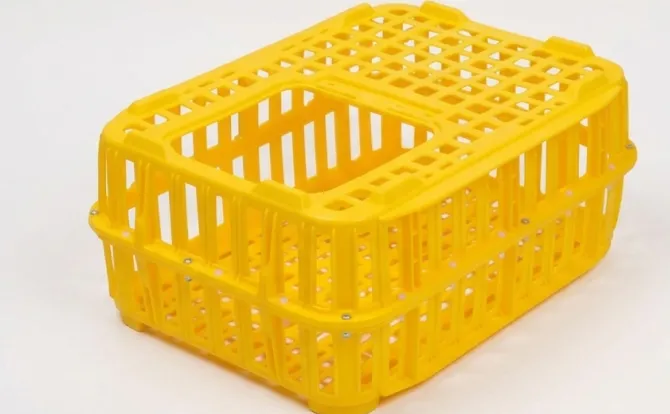
The short answer? It depends on whether you are raising a few backyard pets or running a serious poultry business. If you are looking for a permanent home where your birds can scratch the dirt, a coop is your go-to. But if you need to manage a high-volume flock, maintain strict hygiene, or move birds without a struggle, a chicken cage is the superior tool. Most people get these confused, but choosing the wrong one can tank your productivity.
When you are moving birds between a farm and a slaughterhouse, a wooden coop is useless. You need something breathable and tough. High-quality options are made from brand-new PP high-resistance material. This isn’t that flimsy recycled plastic that snaps the moment you stack it.
These cages are built for “the grind.” We are talking about a load-bearing capacity of up to 400kg. You can stack them ten layers high without worrying about the bottom one buckling.
Handling and Bird Safety
A major pain point in poultry is bird injury during transit. Standard wire boxes can be rough. Modern designs use a tiny mesh grid on the bottom to prevent scratches or blood stasis on the birds’ feet.
If you’re managing a large-scale operation, look for a chicken cage with a sliding door and a large opening. It makes loading and unloading much faster, and your birds stay calm.
Maintenance: The Silent Profit Killer
Wood coops rot. They harbor mites. They are a nightmare to disinfect. A plastic chicken cage is the opposite. You can blast it with a high-pressure hose and soak it in disinfectant, and it’s good as new. Tekin Plast’s cages are designed to be screw-free and self-locking. If one part breaks after years of use, you just replace that single piece instead of tossing the whole unit.
Final Thoughts
So, are you housing a few “garden friends” or scaling a business? If you value hygiene, stackability, and long-term durability, the choice is clear. Don’t settle for flimsy gear that costs you birds and money.
Not if used correctly. Modern industrial cages are designed for hygiene and safety. They prevent birds from stepping in their own waste and protect them from predators that easily break into wooden coops.
Usually, you’re looking at 14 to 16 chickens per crate, depending on their weight (roughly 1.5kg to 2kg per bird). Don’t overstuff them; they need that airflow to stay alive.